/461/1/dicksons-colourband-steelblue.png)
/461/6/kia.png)
/461/6/1736777950678520de138e9_mg.png)
/461/6/1736777897678520a9776a4_nissan.png)
/461/6/1736777923678520c33444c_suzuki.png)
/461/6/124646a136c860b76ed6_kgm.png)
/461/6/1736782811678533dbbcd5b_carzar.png)
/461/6/3558462fc86616b9b932_bikezar-stacked--1-.png)
/461/6/4a0a013444c0e5224f19_vanzar.png)
Electric Cars Take You Further: How Much Could Going Electric Save You?
An EV could be nine times cheaper to drive analysis shows
When you think about switching to an electric car, the environmental benefits might be the first thing that comes to your mind. But, there's another reason more drivers are looking at making the switch: the potential to save money every time they get behind the wheel.
With rising petrol and diesel prices continuing to put pressure on household budgets, the cost of fuelling a car is becoming harder to ignore. And when it comes to the cost of everyday driving, an EV can offer some significant savings, particulary when you're able to charge at home.
An EV can be up to NINE times cheaper to drive
Recent analysis from Carbon Brief found that an electric car charged using an off-peak electricity tariff can cost up to nine times less per mile to run than a petrol or diesel car. Based on current prices (latest figures from Department of Energy Security and Net Zero) , the cost of driving is around:
- 21p per mile for diesel
- 20.1p per mile for petrol
- 7p per mile for an EV charged at the domestic price cap
- Just 2.3p per mile for an EV charged using an off-peak tariff
So, where does the nine-times figure come from? It's the difference between 20p per mile for a petrol car and just 2.3p per mile for an EV using cheaper off-peak electricity.
Even without an off-peak tarrif, charging an EV at the domestic price cap works out at around 7p per mile, meaning it can still cost roughly a third as much to drive as a petrol or diesel car based on these current figures.
And over hundred or thousands of miles, those few pence per mile can really add up.
What could that mean for your annual driving?
Let's say you drive around 10,000 miles per year.
At approximately 20.1p per mile, a petrol car would cost you around £2,010 in fuel over those miles.
At around 7p per mile, an EV charged at home would cost you approximate £700 for the same mileage.
That's a potential difference of around £1,300 over the year. And if you're able to charge using a cheaper off-peak tariff, the potential saving could be even greater.
Carbon Brief's latest analysis estimates that UK EV drivers could now be saving around £1,200 a year in fuel costs compared with petrol drivers, following recent increases in petrol and diesel prices.
Of course, your actual saving will depend on how far you drive, the efficiency of your car, your electricity tariff and where you charge. But the difference between the cost of electricity and the cost of petrol or diesel can be significant.
Fuelling up at home: how much could you save?
One of the biggest financial advantages of going electric is being able to charge your car at home. Instead of making a trip to the petrol station when your tank is running low, you can plug your car in at home and charge while you're asleep or getting on with your day.
And if you have access to a cheaper off-peak tariff, you can charge when electricity costs less.
In fact, you could potentially charge an EV for hundreds of miles for less than £10.
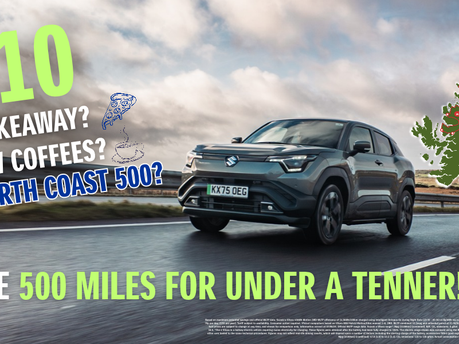
Take the Suzuki e VITARA as an example.When charged using Intelligent Octopus Go during its Night Rate at 8p/kWh via a compatible home charger, Suzuki calculates that you could charge the e VITARA for up to 500 miles for just £9.60. That's potentially over £56 less than filling the equivalent petrol-powered Vitara, based on Suzuki's official comparison^.
So basically... 500 miles of driving for under a tenner. You could even take on the iconic NC500 for around £10 in charging costs. Not bad for one of Scotland’s most famous road trips.
It's not just about the cost of charging
The cost of electricity is only one part of the potential financial benefit of driving an EV. Electric cars have fewer moving mechanical parts than conventional petrol and diesel vehicles, which can mean lower maintenance and servicing costs over time.
There's no engine oil to replace, no spark plugs and no traditional exhaust system. Regenerative braking can also help reduce wear on brake components. The exact cost of maintaining a car will always depend on the model and how it is driven, but the simpler mechanical set-up of an EV can mean fewer components requiring routine maintenance.
But what about public charging?
Home charging is generally the most economical way to charge an EV, but you won't always be at home.
The UK's public charging network continues to grow, giving EV drivers more options when they're away from home. Scotland's public charging infrastructure has improved enormously, but it's not flawless. Some charge points can be out of service, occupied, or slower than advertised. In more remote parts of the Highlands, spacing between charge points on some routes can still be a consideration.
That said, the network is expanding quickly. So for most drivers, the vast majority of charging happens at home, making this less of a day-to-day issue than it might seem. Also, public charge points outnumber public fuel pumps almost two-to-one across the UK. Plus, great resources like ZapMap highlight just how many charge points are available and how close they are to you!
For many EV drivers, being able to do the majority of their charging at home is where the biggest running-cost savings can be made. And with around 90% of EV charging estimated to take place at home, it's a saving that can work for everyday driving rather than just occasional journeys.
What about EV tax?
There is a change on the horizon that EV drivers should be aware of. The Government plans to introduce Electric Vehicle Excise Duty (eVED) from April 2028, including a mileage-based charge for fully electric cars.
That will add to the cost of driving an EV, but based on current petrol, diesel and electricity prices, the cost of charging an EV would still be significantly lower than the cost of fuelling a conventional car. Energy prices, fuel prices and government policy can all change, so it's important to look at the complete running costs when comparing your next car.
The cost of going electric is changing
For years, the conversation around electric cars has often focused on range, charging and the environmental benefits. But the economics of driving an EV are becoming an increasingly important part of the conversation.
Up to nine times cheaper per mile. Around £1,200 in potential annual fuel savings. And, in the right circumstances, up to 500 miles of driving for just £9.60.
Your exact saving will depend on the car you choose, how much you drive and how you charge it. But with fuel prices making every trip to the petrol station count, it's worth looking at what electric driving could do for your monthly and annual motoring costs.
Ready to see how much you could save?
At Dicksons, we've got a growing range of electric cars available from some of the UK's favourite manufacturers including Kia, Nissan, MG, Suzuki and KGM.
Whether you're looking for a small EV for everyday journeys like the Kia EV2, a family-friendly electric SUV like the MGS6 EV, or something for longer trips around the Highlands, there's more choice than ever.
Explore our electric range or book a test drive and see if making the switch could make sense for you. Or, if you're not quite ready to make the switch, we still have a wide range of new and used hybrid, petrol or diesal cars.
^Based on maximum potential savings and official WLTP data. Suzuki e VITARA 49kWh Motion 2WD WLTP efficiency of 14.9kWh/100km charged using Intelligent Octopus Go during Night Rate (23:30–05:30) at 8p/kWh via compatible home charger. A daily standing charge also applies (varies by location, up to around 70p per day, £255 per year). Tariff subject to availability. Consumer action required. Petrol comparison based on Vitara Mild Hybrid Motion/Ultra manual 1.4L 2WD, WLTP combined 53.2mpg and unleaded petrol at £1.56/litre. £255 standing charge has already been deducted from annual petrol saving. Electricity and fuel prices are subject to change at any time, and shown for comparison only. Information correct at 07/08/26.